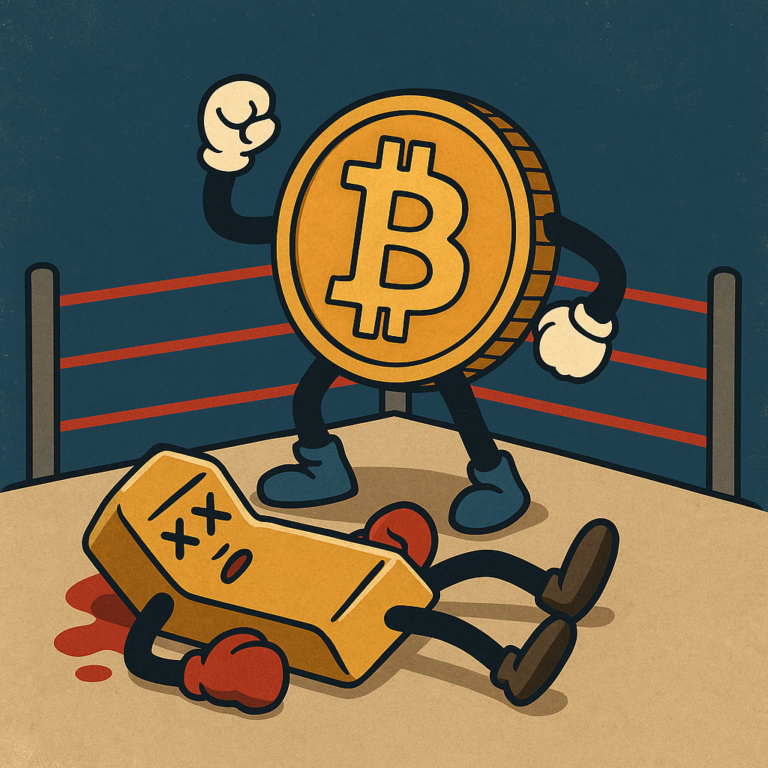
In the market of money, the winner takes all.
The Gravity of Network Effects
Money isn’t just a medium of exchange—it’s a network. And like all networks, its value grows exponentially with each additional participant or ‘node’. (See ‘Metcalfe’s Law) Put simply, the more people who use a particular money, the more valuable it becomes. This feedback loop, known as the network effect, drives consolidation.
It’s why we use one internet protocol (TCP/IP), one dominant search engine, and one global mapping standard. Money behaves the same way. Fragmented systems are inefficient. Markets crave a single, universal language of value.
Everyone Wants What Everyone Else Accepts
Imagine walking into a market with a currency that no one else uses. You’d be laughed out, forced to convert, or ignored altogether. The value of money isn’t just intrinsic—it’s social.
The more people that accept a currency, the more desirable it becomes. This creates a natural winner-takes-all dynamic, where one money tends to dominate simply because everyone else is using it.
Money Is Language, and Language Converges
When communicating with one another, we don’t speak multiple languages in the same conversation—we converge on a common tongue. Why? Because the transmission of ideas is more efficient when both parties use the same words.
Money is no different. It’s the language of value, and global markets naturally converge toward the clearest, most trusted, and most widely understood form.
Gold Did It Before. Bitcoin Is Doing It Now.
In the past, gold became the global standard not because it was forced on people, but because it worked best. (See ‘Schelling point’) It was portable, divisible, and hard to counterfeit. It didn’t matter where you lived—gold spoke a universal language.
Today, the incumbent US dollar (and fiat currencies in general) is failing and Bitcoin is taking up that role. Digital, borderless, decentralized—it scales the trust of gold into the digital age. With each new user, its network effect strengthens. It is doing what every dominant form of money has done: absorbing competitors through superior utility and trust.
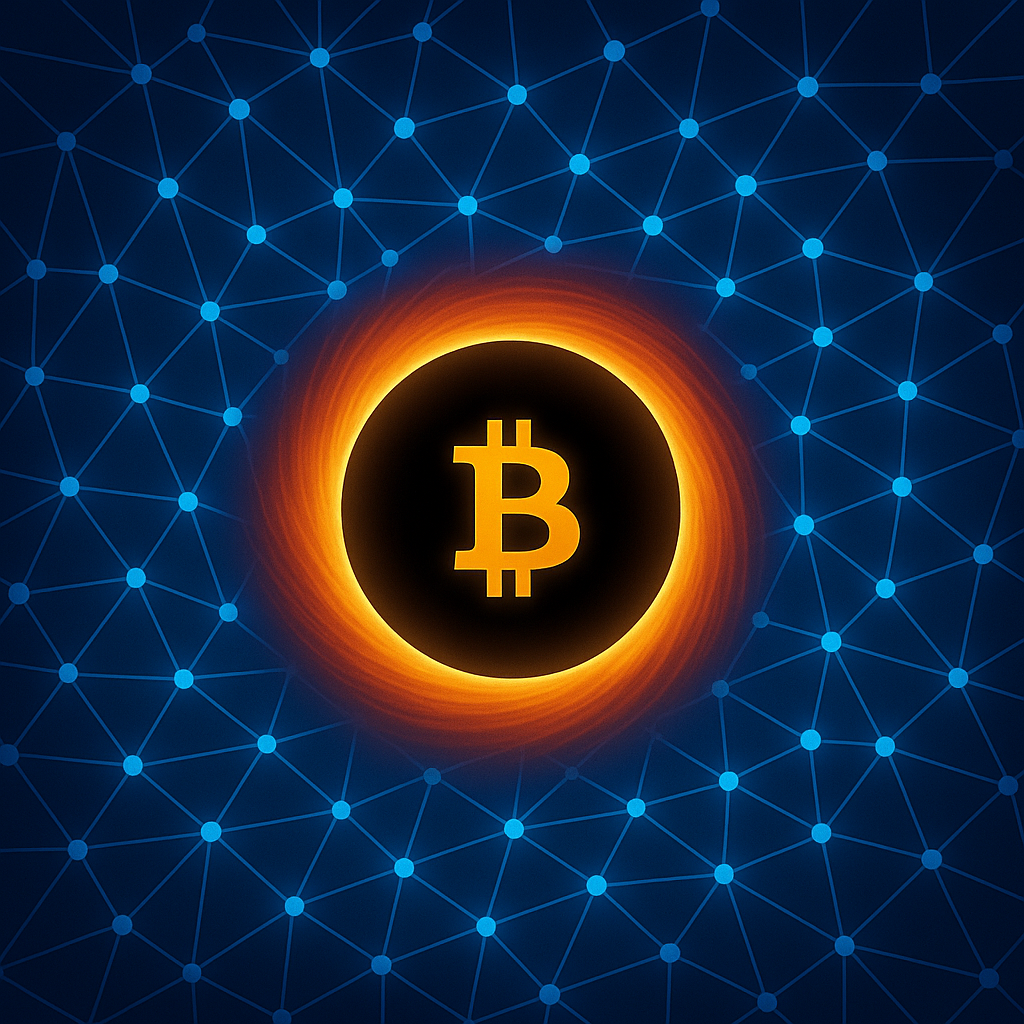
Bitcoin is the black hole of value and we are approaching the event horizon.
Monetary Maximalism Isn’t Ideological—It’s Inevitable
Critics call Bitcoin maximalism a belief system. But it’s really just economic gravity. The market naturally coalesces around the most secure, reliable, and censorship-resistant money.
This isn’t about forcing adoption—it’s about recognizing the inevitability of convergence. Just as we don’t need a hundred internets, we don’t need a hundred monies. One will win.
The Bottom Line
- Money is subject to network effects. Fragmentation is inefficient. Markets naturally converge.
- Gold did it in the physical era. Bitcoin is doing it in the digital one.
- All money converges to one. Not because it’s mandated, but because it’s inevitable.