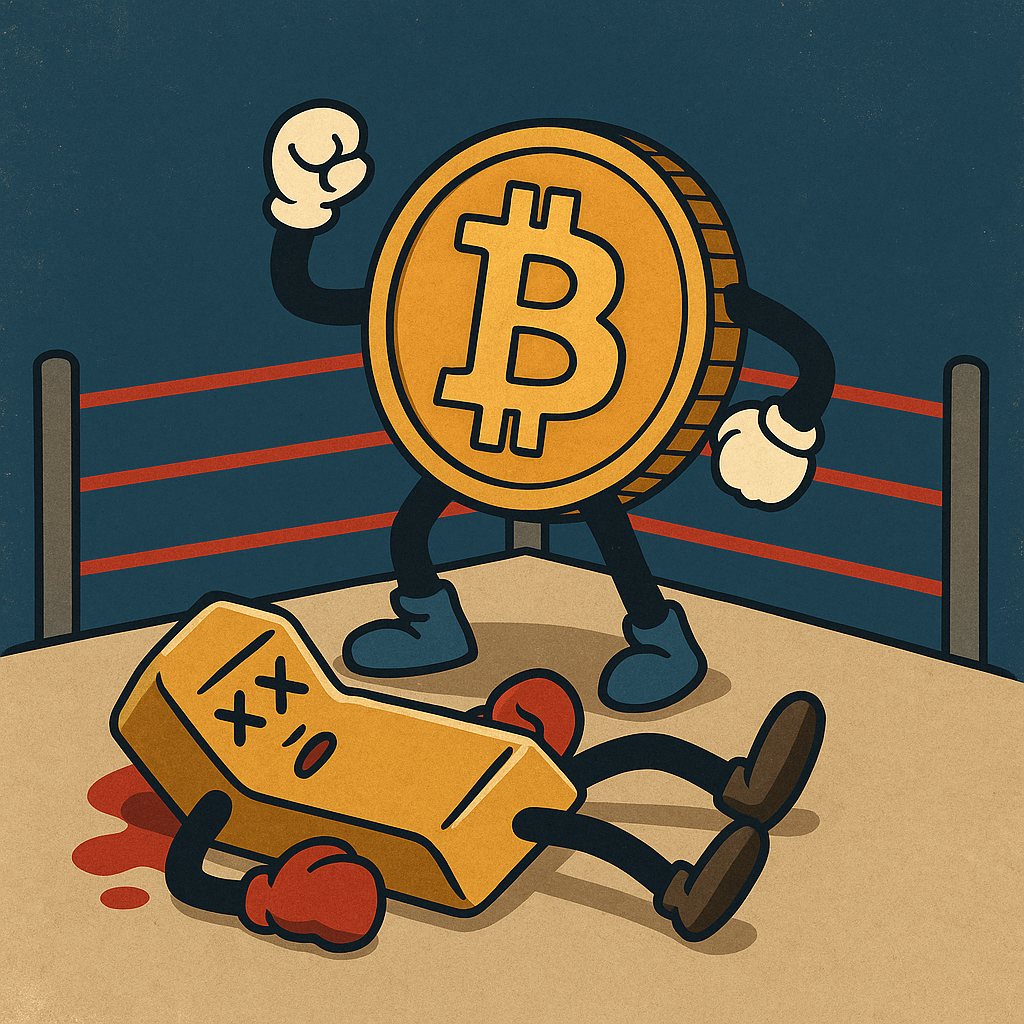
Everything that was good about gold, is perfected in bitcoin.
Gold Was Sound—But Clumsy
For centuries, gold was the reigning champion of sound money. It was scarce, durable, divisible, and trusted across civilisations. But gold had a problem: it didn’t scale well.
It’s heavy, physical, and difficult to transport. Verifying its authenticity requires expertise or equipment. Storing it securely is expensive. Sending it across borders is slow and risky.
These frictions made gold vulnerable to centralisation. As economies grew, gold was increasingly stored in vaults and abstracted into paper claims. That’s when the problems began.
What Can Be Custodied Can Be Confiscated
When you entrust your gold to a third party, you take on counterparty risk. And when that third party is a government, you take on political risk.
In 1933, the U.S. government made private ownership of gold illegal. Citizens were forced to turn in their savings under penalty of law. It was a monetary rug-pull enabled by centralisation.
Gold’s physical nature made this inevitable. It had to be stored. And anything that can be stored in one place can be seized from one place. Bitcoin changes that entirely.
Bitcoin Is Gold Without the Weight—or the Weakness
Bitcoin takes everything good about gold—scarcity, neutrality, durability—and upgrades everything else.
It’s easy to store. Easy to verify. Easy to move. You can send it anywhere on Earth in minutes, with no permission, no customs paperwork, and no risk of physical interception. It doesn’t require trust in custodians or institutions. Just math.
Bitcoin is the first bearer instrument that is both scarce and digital. You can self-custody it with a phone, memorise a seed phrase, or split it across multiple locations with multi-sig security. No vaults. No guards. No trusted middlemen.
Bitcoin Resists Seizure by Design
Governments can’t seize what they can’t find. Bitcoin, when held properly, is practically unconfiscatable. There are no vaults to raid, no doors to kick in. If it’s stored with basic operational security, it’s invisible and irretrievable to any authority.
This flips the power dynamic. With gold, you store value in their world. With Bitcoin, you bring value into yours.
Digital Gold—Only Better
Some call Bitcoin “digital gold,” but that undersells it. It’s gold with teleportation. Gold with auditability. Gold without borders, bulk, or bureaucracy.
It’s also more scarce. Gold’s supply increases by about 1–2% per year through mining. Bitcoin’s supply is capped forever at 21 million. It’s not just sound money—it’s perfectly sound.
The Bottom Line
- Gold served humanity well. But its flaws became fatal in a world of digital speed and state power.
- Bitcoin fixes those flaws. It takes gold’s monetary properties and makes them portable, programmable, and sovereign.
- If gold was the best money of the physical world, Bitcoin is the best money for the digital one—and the one to come.