They get richer by proximity, not productivity.
Wealth Extraction > Value Creation in Fiat
In a healthy economy, wealth comes from creating value—solving problems, building products, and serving others. But in a fiat economy, value creation takes a back seat to value extraction.
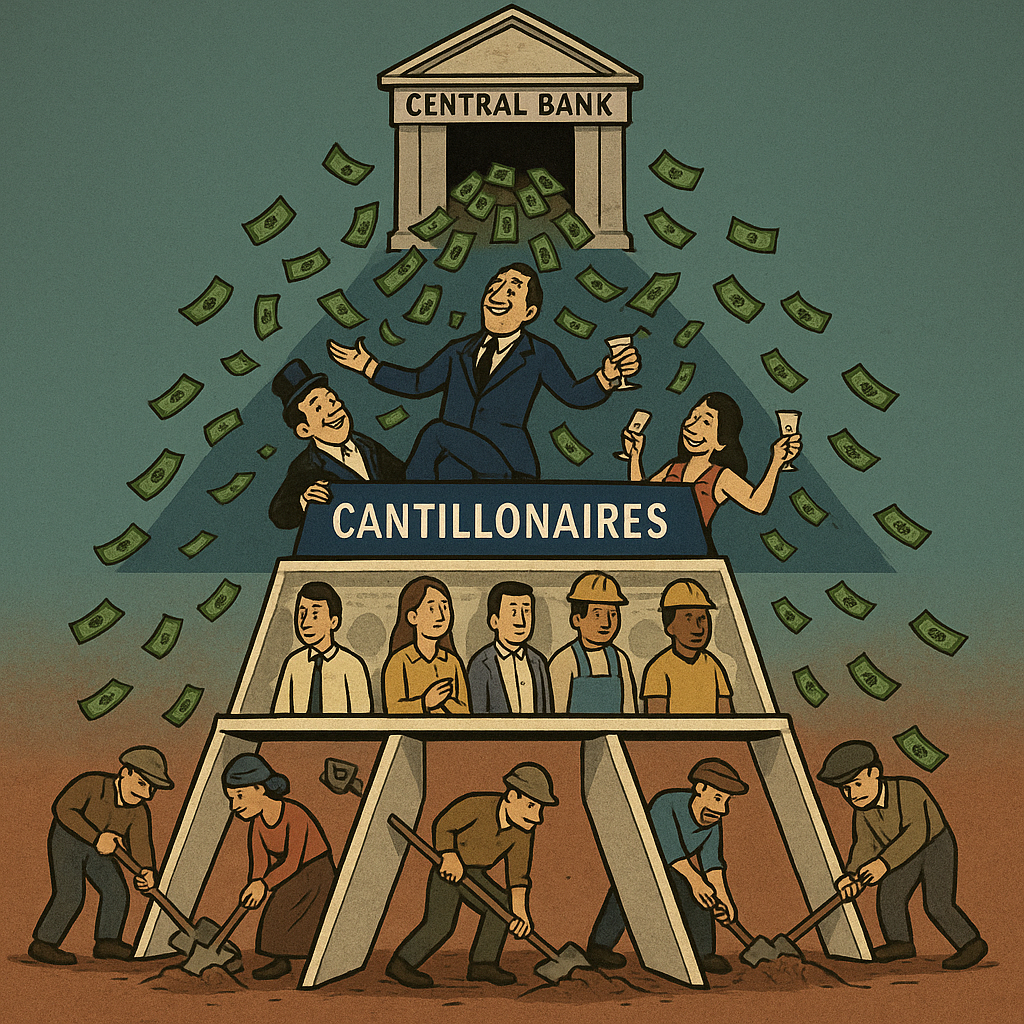
Cantillonaires—the beneficiaries of early access to newly printed money—don’t need to innovate or toil. They profit by front-running inflation, investing before prices rise, and dumping assets on those who arrive later. It’s not about building—it’s about positioning.
They aren’t entrepreneurs. They’re rent-seekers who play the system like a rigged game.
Access to Cheap Credit Beats Hard Work
In today’s monetary order, the biggest financial advantage isn’t intelligence, effort, or talent—it’s access to cheap credit. The closer you are to the money printer (central banks, politicians, government contractors), the more leverage you have.
This access allows Cantillon insiders to borrow at low rates, buy scarce assets, and watch them inflate in value—long before the average person sees a dime. Meanwhile, workers must chase those inflated prices with stagnant wages and rising debt.
This is how inequality metastasizes. Not through laziness, but through structural privilege.
Bitcoin Levels the Playing Field
Bitcoin rewrites the rules. There’s no money printer, no backdoor liquidity, no political favoritism. Everyone interacts with the network on equal terms.
You can’t bribe Bitcoin. You can’t inflate it. You can’t front-run those with less access. You either mine it buy it, or earn it—just like everyone else.
In a Bitcoin world, wealth must be earned, not engineered. It rewards proof-of-work, not proof-of-privilege.
The Bottom Line
- Cantillonaires don’t produce—they position.
- They profit not from value, but from advantage.
- Bitcoin ends the game. It makes money honest again. And when money is honest, work matters more than connections.